Skip to content
Kalamazoo Foundation Repairs

Serving Kalamazoo and nearby areas

Water in Basement in Kalamazoo, MI

Water in a Kalamazoo basement tells you where the wall or drainage is failing, so book a free inspection to find the source and get a written price.

Book a free foundation inspection

Tell us what you are seeing. A local specialist calls you back the same business day.

Local to Kalamazoo

We connect property owners in Kalamazoo and nearby areas, including Vine, Stuart, South Street, Westnedge Hill, Edison and Portage, with one independent local foundation repair specialist.

  • April 2026 groundwater emergency

    The city and county declared a state of emergency on April 17, 2026. The city said abnormally high groundwater caused basement flooding in numerous homes.

  • Sand below, clay above

    USDA lists the Kalamazoo soil as loam and clay loam over sand and gravel. Water slows in the clay layer near the top of your wall, then moves fast through the sand once it gets down there.

  • A river crest on record

    The Kalamazoo River set a record at Comstock in February 2018, cresting at 11.7 feet. Low ground near the river and Portage Creek gets wet first.

What it costs

Typical published ranges for Kalamazoo. The contractor's written estimate is the price, and the inspection is free.

WorkTypical range
Inspection and written estimate Free
Basement waterproofing, typical job $3,000 to $10,000
Interior perimeter drain $40 to $120per linear foot
Crack injection $250 to $1,000per crack
Sump pump install $800 to $2,000
Gutters and downspouts $3 to $30per linear foot

See typical foundation repair prices in Kalamazoo

Where the water shows up

Where you find the water is the best clue to where it gets in. Walk the basement during or right after the wet spell and look for:

A line of water at the floor edge

Water seeping in where the wall meets the floor.

A wet stripe down the wall

Water coming through a crack.

Water under a window

A window well that fills up and spills in.

Puddles in the middle of the floor

Water pushing up through floor cracks or a floor drain.

Damp blocks with a white crust

Water moving through block and leaving minerals behind.

Wet spots high on one wall

Often a gutter overflowing or a downspout dumping right there.

A sweaty floor and walls in summer

Humid air, not a leak.

A sump pit that overflows

The pump cannot keep up or has failed.

Why Kalamazoo basements take on water

Rising groundwater. Water in the ground does not stay at one level. It rises after snow melt and long rain. Kalamazoo gets about 70 inches of snow a year, and most of it melts over a few weeks in spring. In April 2026 the city declared an emergency after abnormally high groundwater flooded basements in numerous homes, even ones that had stayed dry for years.

Soil that holds water against the wall. The common Kalamazoo soil is loam and clay loam for the first few feet. That layer slows water down, so rain and melt sit against the upper wall. Below it is sand and gravel that fills fast once water reaches it. A 1960 USGS study also found the moraines, the low glacial hills, are mostly slow-draining till.

Old walls. Many homes near downtown have brick, stone or early block basements with worn mortar. Water finds every open joint.

Low ground. Homes near the Kalamazoo River and Portage Creek, and in low spots anywhere, are the first to see water when levels rise.

When it is minor and when it is urgent

Minor. A damp spot after one heavy storm. It dries in a day. Gutters were clogged or a downspout came loose.

Needs a fix. Water comes back every spring. It enters at the floor edge or a crack. The sump pump runs a lot. Paint peels and the wall has a white crust.

Urgent. Standing water near the furnace, water heater or outlets. A wall that leaks and also bows or has a sideways crack. Water that rises faster than you can remove it.

How it is usually fixed

The fix depends on how the water gets in. The contractor we connect you with should show you the source before quoting.

  1. Outside water control. Clean gutters, extend downspouts, slope the soil away from the house, add window well covers. Cheapest and often the first step.
  2. Crack injection. A single leaking crack in a poured wall can be filled with foam.
  3. Interior drain and sump pump. A drain is set in the floor along the walls. It catches water at the floor edge and carries it to a pump. This is the common fix for groundwater.
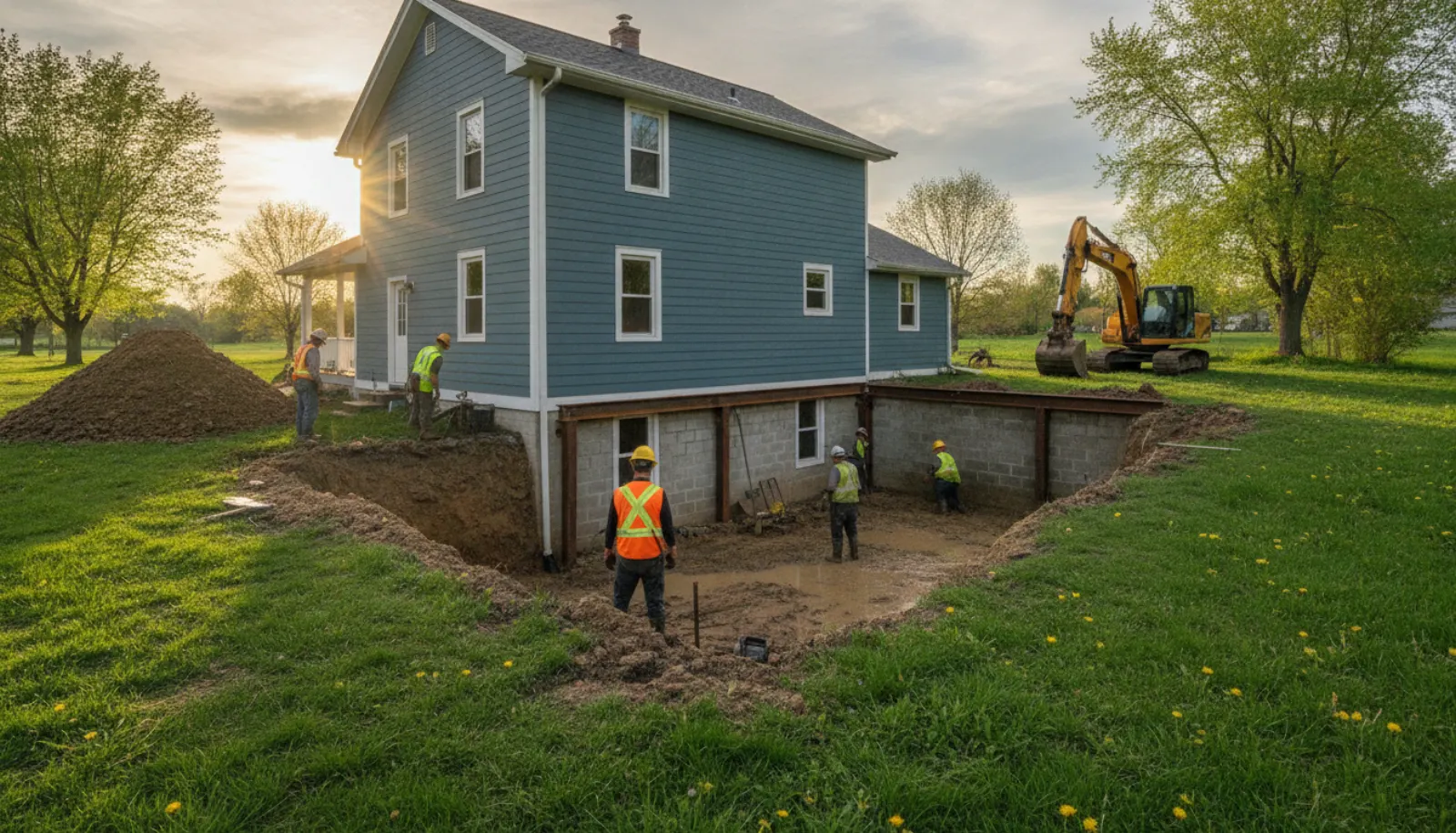
  4. Outside waterproofing. The crew digs along the wall, seals the outside face and adds a drain at the footing. Costs more but stops water before it reaches the wall.
  5. Wall repair with it. If the wall also bows or cracks sideways, bracing goes in with the water fix.

What it costs

The cost table on this page shows typical ranges from Fixr cost guides, not a quote. Outside water control can cost a few hundred dollars. A full interior drain and pump is priced by the foot of wall.

What to do right now

  1. Keep power off in the basement if water is near outlets or cords.
  2. Move boxes and furniture off the floor.
  3. Take photos and short videos of where the water enters.
  4. Note the date and whether it rained, melted or was dry.
  5. Run a dehumidifier and fans once the water is out.
  6. City residents can report flooding through the city's flood survey during an emergency.

Frequently asked questions

Why is there water in my basement when it has not rained?

It is often groundwater. When the soil is full from snow melt or weeks of rain, the water table rises and water pushes up through the floor joint or cracks. In April 2026 high groundwater flooded basements across Kalamazoo for that reason.

Why does water come in where the wall meets the floor?

That seam is called the cove joint. The wall and floor are poured or laid at different times, so there is a gap between them. When water builds up under and around the house, that seam is the easiest way in.

Is a little water in the basement a big deal?

It depends on how often. A damp spot once in a bad storm may only need gutter work. Water that comes back every spring keeps the soil wet against the wall. Over time that can crack or push in the wall.

How do I know if it is a leak or condensation?

Tape a square of plastic wrap to the damp wall for two days. Water on the room side means humidity. Water under the plastic means it is coming through the wall.

Does homeowners insurance cover water in the basement?

Often not. Michigan's insurance department says standard homeowners policies do not cover flood damage, and damage from a sump pump overflow or sewer backup is usually covered only if you add an endorsement. Read your policy or ask your agent before you need it.

Should I pump out the water myself?

You can remove small amounts with a wet vacuum. Do not walk into standing water if outlets, cords or the furnace are wet. Turn off power to the basement first or call for help.

Find out where the water comes in

Call (269) 448-7655 or send the short form. A local crew will call you back, find where the water gets in for free, and give you a written price to stop it.

(269) 448-7655 Free inspection